








INDEPENDENT SCHOOL VS GRAMMAR SCHOOL
What is a grammar school?
In the strictest sense, grammar schools are funded by the state, although there are former state-funded grammar schools that are now privately run including Manchester Grammar School, Manchester High School for Girls, Merchant Taylors’ School, Loughborough Grammar School, Reigate Grammar School and North London Collegiate. Grammar schools are academically selective, and students need to sit the 11+ entrance exam.
What is an independent school?
A private or independent school is a fee-paying institution that operates independently of government funding and control. These schools are funded by the tuition fees paid by parents, but they also generate income through endowments, investments, charitable donations, and alumni fundraising.
What is an independent school?
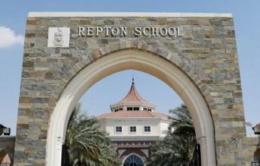
Repton School in Derbyshire is a top co-ed boarding school (ages 13–18) renowned for blending a traditional academic curriculum with world-class sporting excellence and exceptional pastoral care. It offers a "fully rounded" education, frequently winning "Best for Sport" awards (hockey, football, cricket) while boasting high A*-A grades and nurturing confident, grounded pupils.
Founded in 1557, the traditional values of encouraging pupils to aim high whilst showing respect for all are still of utmost importance, however Repton is undoubtedly modern in terms of practice and outlook.
Repton is ambitious for every one of its pupils; Repton is small enough to ensure that the talents of each individual are nurtured and valued, yet large enough to compete on the international arena across academia, music, the arts and sport. We believe in the pursuit of academic excellence and success, but this is not at the expense of an all-round and broad education.
READ 10 TIPS FOR PREPARING FOR BOARDING SCHOOL
8 Factors to Consider
Outline the main factors parents should consider when choosing between the two.
1. Admissions Process
- The admissions process for a grammar school is very structured. Pupils must be registered for the 11+ test in advance, usually in the spring or summer term of Year 5. The 11+ exam is usually taken in September of Year 6. In addition to this, a secondary school application must be submitted to the local authority (LA) by 31st October of Year 6. Results of the 11+ are released prior to 31 October so that parents are able to make informed choices. In some cases, there are multiple rounds or pupils are sometimes added to waiting lists. Criteria such as catchment area, pupil or sibling links may be taken into consideration.
- The admissions process for private schools generally involves registering early, paying a non-refundable fee, submitting past reports, and undergoing assessments or interviews. The process is independent for each school, often featuring entrance exams (e.g., ISEB, SSAT) and taster days to evaluate fit, character, and academic readiness. Typically, they do not require a specific grade to get in but assess the whole child and their ability to thrive within a particular school.
2. Entrance Exams and Interviews
Grammar school pupils will need to sit the 11+ exam. It typically covers English, Maths, Verbal Reasoning, and Non-Verbal Reasoning. Private school pupils typically sit entrance exams in English, Maths, and Verbal/Non-Verbal Reasoning, often taken at 11+ (Year 6) or 13+ (Year 8). Key assessments include the ISEB Common Pre-Tests (online), Common Entrance (CE). Many independent schools set their own unique papers to assess aptitude rather than just curriculum knowledge.
3. Selection Criteria
Grammar school selection is primarily based on passing the 11+ exam in Year 6, which assesses verbal/non-verbal reasoning, English, and maths. Candidates must meet a minimum qualifying score set by the school or consortium. If oversubscribed, places are allocated based on criteria like catchment area, sibling priority, or pupil premium. Private school selection typically involves a combination of academic assessment (entrance exams, cognitive tests), previous school reports, personal interviews with the child and family, and evaluation of extracurricular talents. Schools look for character, potential, and "fit" within their specific ethos.
4. Tuition Fees and Scholarships
State-funded grammar schools in the UK are free to attend, as they are funded by the government. Private school fees in the UK have risen significantly, with average day school fees now around £19,000–£22,000 per year and boarding schools costing upwards of £50,000 per year, largely due to the addition of VAT. The reputation and location of the school will also impact the fees. A school like Repton, which “sits comfortably among the top co-educational boarding schools for academic achievement and shines particularly brightly in terms of value added” costs £40,665 per term for day pupils and £54,825 per term for boarding pupils.
5. Class Sizes and Individual Attention
Grammar schools tend to have larger class sizes of up to 30 per class whereas private schools can be 10-15 per class and as low as 8-12 in Sixth Forms.
With larger class sizes it is harder to provide individual attention for students in grammar schools. Also, given their selective nature, it is widely assumed that the pupils are academically able, therefore requiring less personalised learning.
In private schools, the focus is on the individual and creating a personalised learning environment for each pupil. There is a pupil teacher ratio in state-funded schools of 18:1 versus a pupil teacher ratio of 8.5:1 in private schools.
6. Facilities and Resources
Private schools tend to have superior facilities especially when it comes to extra-curricular activities e.g. swimming pools, tennis courts, 3G pitches, science labs, performance theatres and extensive grounds due to the funding from tuition fees and alumni donations and PE-backed group ownership. Grammar schools tend to provide excellent academically focused facilities with high quality teaching, but they will be subject to tighter-state funded budgets. Social Diversity and Student Body
Advantages and Disadvantages
Private schools offer a bespoke experience for your child: smaller class sizes, personalised learning and access to state-of the art facilities. Your child is likely to experience a greater breadth of extra-curricular activities and more unusual or historic sports such as fives, modern pentathlon, horse-riding, fencing. For parents, the disadvantage is the cost. Post-VAT, tuition fees in the UK are becoming increasingly prohibitive. However, bursaries and scholarships are available in many of the UK’s leading private schools.
Grammar schools suit academically able children, and the environment tends to be academically focused. Grammar schools are focused on academic results and for some children this environment may feel quite pressured. Class sizes are larger than in private schools and there is less differentiated learning; your child will be expected to keep up. For parents, the advantage is that there is no cost to send to send your child to grammar school (although you may need to invest in tutoring to pass the 11+). Parents have more financial freedom to choose and pay for extra-curricular activities, for example.
Compare the key benefits and drawbacks of private and grammar schools. Present a balanced view of both options without favouring one over the other. Use clear bullet points for advantages and disadvantages.
Tips for Parents to Choose the Best School
- Research schools online via the school website.
- Attend Open Days.
- Ask for a private tour (private school only).
- Be aware of timelines and deadlines to register, apply and sit exams.
- If you are considering a selective school, you may want to consider having your child tutored in preparation.
- Speak to your child and understand their hopes as well as any concerns they have.
- Know your child - do they thrive in busy environments? Do they prefer quieter environments? Are they academic? Are they sporty? Do you want your child to go to school locally (easier travel and local friends) or are you happy for your child to bus to school or perhaps board?
- Think long term. Paying school fees is a long term commitment and at a minimum, ensure you can commit to key stages and ideally Prep, Senior or Sixth Form.
- Explore scholarships and bursaries - look on school websites, phone schools and ask.
- Go and visit the school on a normal day - what does pick up look like? What does drop off look like? Can you imagine your child there? Can you imagine yourself there?
- Does your child have additional needs? Can the school support their needs? Would your child thrive in this school?
Are Grammar Schools Only for Exceptionally Gifted Students?
Grammar schools are for academically able students. Your child needs to enjoy learning and be prepared to study as there is a strong focus on academic studies and succeeding in exams.
Are Independent Schools Only for Wealthy Families?
No. Many independent schools offer scholarships and bursaries, and many independent schools now offer transformational bursaries which cover the entire cost of tuition.